Brianna’s battle with Milez
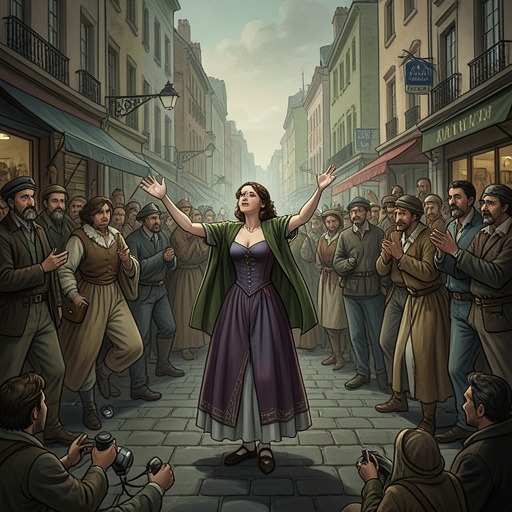
On the Come UpBrianna’s battle with Milez at The Ring is both a public breakthrough and a personal provocation. Brianna wins, but Milez’s disrespectful line about her father, Law, makes the contest more than a test of lyrical skill. The attention it brings introduces her to Supreme, who sees promise in her performance and argues that the Ring alone cannot build a career. The battle thus opens a path forward while beginning a recurring struggle over who gets to define Brianna: the performer herself, the people managing her, or an audience eager to read her lyrics as proof of a fixed identity.
The Battle and Its Personal Stakes
The available account establishes the result and the emotional charge rather than offering a full play-by-play. Later, Supreme tells Brianna that she made Milez look foolish at The Ring, while allowing that Milez’s head was elsewhere. Brianna rejects that explanation as incomplete: Milez had delivered a disrespectful line about her father, and she insists that it was not merely a line. Supreme calls the encounter a battle and says Milez was trying to get under her skin, not making anything personal. Brianna does not accept that distinction; to her, bringing up Law has made the contest personal already.
That difference in interpretation reveals why the win cannot simply settle the matter. Supreme treats the battle as a bounded performance, where provocation belongs to the competition and should end with it. Brianna hears the attack through her relationship to her father, so the words continue to matter after the contest is over. Her response is not presented as indifference to the rules of battle: she knows Milez meant to provoke her. Rather, she refuses the suggestion that a deliberate insult becomes harmless just because it was delivered in a competitive setting.
A Breakthrough Seen by Others
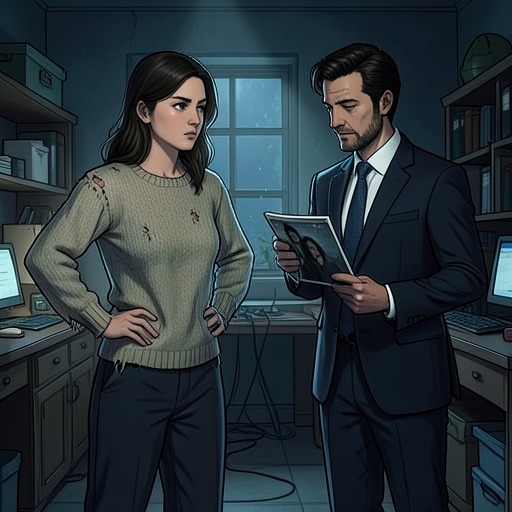
After seeing Brianna and Jayda arrive, Supreme approaches to congratulate her on what she did at The Ring. Brianna answers with confidence, though her narration admits she does not really know how to accept the praise and feels she has to act as if she does. Supreme says he sees an elusive quality in her that people in the music business call “It.” His assessment gives the battle a consequence beyond the immediate contest: a respected industry figure sees Brianna as someone with potential, not simply as a newcomer who has won one round.
Supreme also links his praise to Law, saying that her father would be proud. The remark brings Brianna a complicated physical and emotional response: she feels a twinge in her chest and cannot tell whether it hurts or feels good, perhaps because it does both. The battle has therefore created an opening for professional recognition while touching a grief and family bond that remain unresolved. Praise about her talent arrives entangled with the memory of her father, the person whose own career Supreme invokes as a precedent.
The scene also makes visible the different pressures Brianna faces as a young woman entering a male-dominated rap environment. When a man at a music gathering doubts that she can do anything with a beat and mocks the prospect of nursery rhymes, Brianna recalls Aunt Pooh’s warning that she would have to work twice as hard for half the respect, be as cutthroat as the men, and show no weakness. She answers the skeptic with a sharp joke; the men laugh and offer her dap, and the moment shifts from ridicule to provisional acceptance. The episode is not the battle itself, but it clarifies the conditions under which her Ring victory is received: skill must be demonstrated, and Brianna is expected to meet both gendered doubt and the demand to prove she belongs.
From Ring Attention to Music
Supreme argues that a battle can attract attention but cannot, by itself, secure a record deal. He contrasts Brianna’s prospects with those of Dee-Nice, whom he manages: The Ring brought Dee-Nice attention, but music brought him a deal. Supreme says he has managed him for a year and recalls that the same pattern applied to Law, whose career took off when the right song generated the right buzz at the right time. The Ring victory is consequently framed as a beginning, not a destination: public recognition must be converted into recorded music if Brianna is to move forward in the industry.
Supreme’s advice carries both encouragement and a commercial logic. He tells Brianna he has seen something special in her, then challenges her for doing nothing with it. He presents a successful song as the next step and cites “Swagerific” as an example of a simple track that became a hit. The battle gives Brianna visibility; Supreme’s account of his clients and of Law offers a model for what visibility might become. At the same time, it establishes him as an interested adviser whose view of artistic promise is tied to music-industry outcomes.
What the Battle Sets in Motion
The later public life of Brianna’s song shows how quickly an artist’s work can be separated from the context she gives it. On television, a report identifies “On the Come Up” as a hit among young listeners and describes it as violent, citing its attacks on law enforcement. The broadcast shows only fragments of the track, with curse words bleeped. During a later interview, Hype says some lyrics are excessive and asks about lines concerning weapons and killing police; Brianna disputes his reading of the lyric about being lawless. When he acknowledges that her father rapped about similar material at sixteen without surprising him, Brianna points to the difference: the controversy catches him off guard because she is a sixteen-year-old girl doing it.
This dispute echoes the battle’s earlier conflict over meaning. In The Ring, Milez’s line about Law turns competition into something Brianna experiences as personal; in the media, listeners and commentators treat selected lyrics as direct evidence of who Brianna is. Supreme’s earlier counsel to “play the role” responds to the way outsiders impose ready-made expectations, but that strategy sits uneasily beside Brianna’s insistence on controlling her own words. Her later freestyle makes that refusal explicit: she rejects being a puppet or clone, connects her identity to being a daughter, sister, hope, and mirror, and distinguishes speaking about what she sees from claiming that violence defines her. The battle with Milez is not the cause of every later controversy, but it begins the chain of visibility through which Brianna’s performance is scrutinized and interpreted.
Significance
The battle matters as a turning point in Brianna’s movement from local performance toward a wider musical career. Her victory earns notice, Supreme’s approach, and the possibility of translating Ring attention into recorded music. Yet the scene also places recognition beside constraint: her father’s memory makes an opponent’s words land differently, and the industry’s interest in her talent comes with expectations about how a young Black girl should perform and present herself.
Its lasting importance lies in that tension rather than in the win alone. Supreme sees an exceptional quality and urges Brianna to make music; Brianna, meanwhile, has to navigate praise, commercial advice, gendered skepticism, and public readings that reduce a song to a supposed confession of character. The battle establishes her ability to command attention, while the events that follow ask whether she can keep that attention without surrendering authorship of her voice.